Brown Patch
Brown Patch in turf: Identification, Causes & Management
What is Brown Patch?
Brown Patch is one of the most common diseases of managed turf during Australia’s warmer months. It is caused by the fungus Rhizoctonia solani, a soil-borne pathogen that attacks the leaves, leaf sheaths and crowns of susceptible turfes.
Unlike many turf diseases, It develops extremely quickly under warm, humid conditions and can significantly reduce turf quality in just a few days. While the disease rarely kills established turf, severe outbreaks can cause widespread thinning, poor playing surfaces and increased recovery time if left unmanaged.
It commonly affects cool-season turfes such as perennial ryegrass, creeping bentgrass and tall fescue, but can also occur on warm-season species, including couch (Cynodon spp.), kikuyu and zoysia during periods of prolonged heat and humidity.
Symptoms of Brown Patch
Above-Ground Symptoms
Brown Patch symptoms can vary depending on mowing height and turf species but typically include:
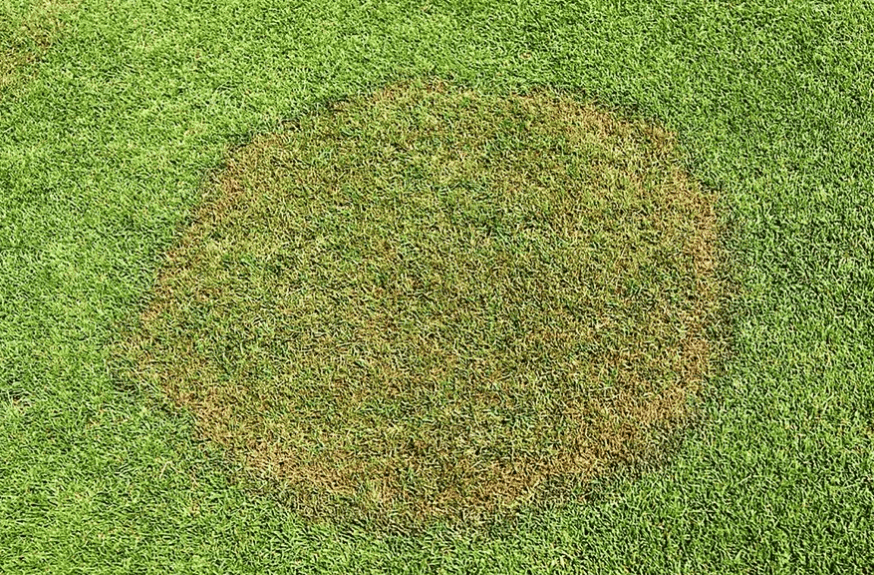
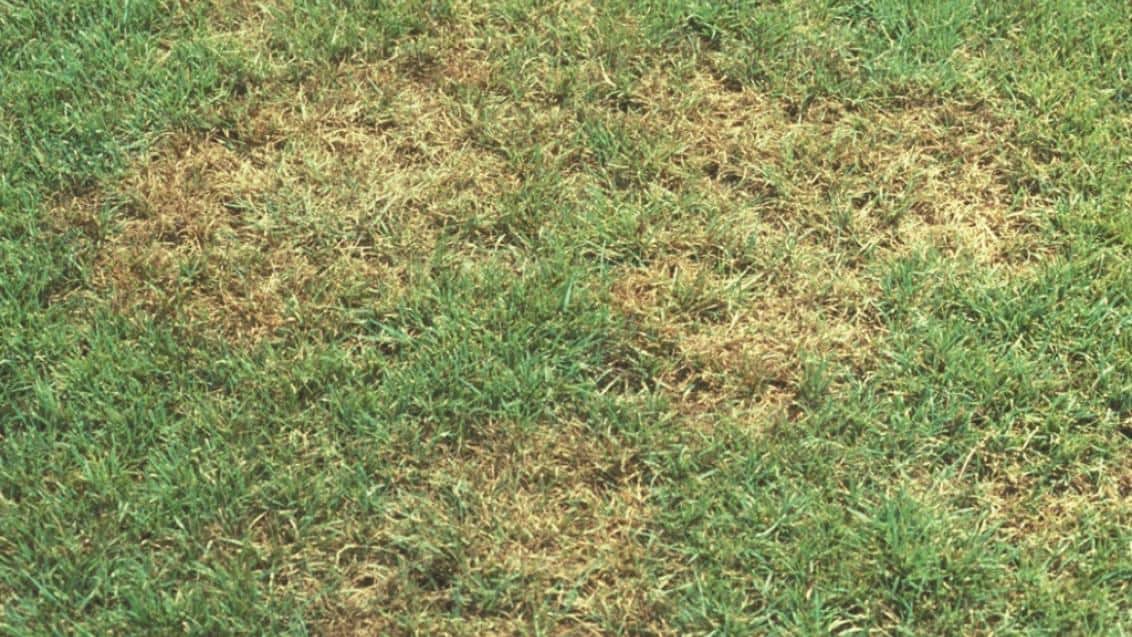
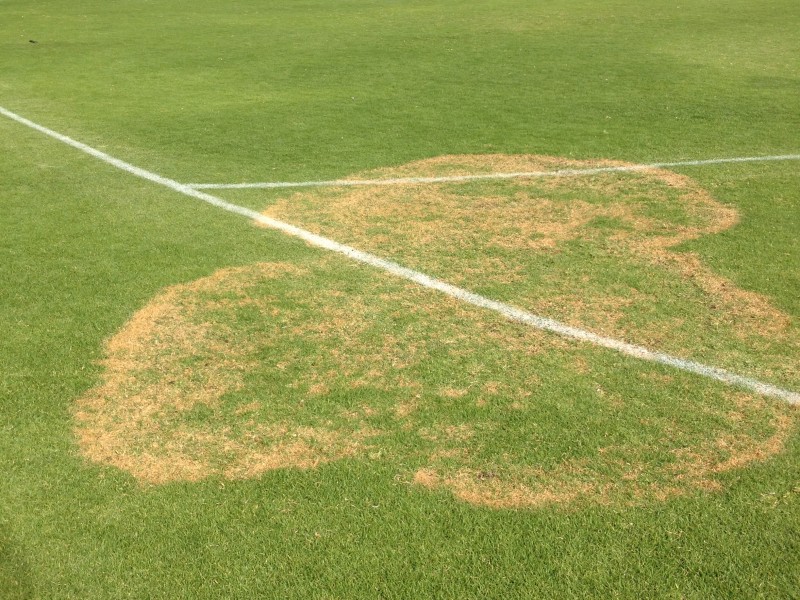
- Circular patches of light brown or straw-coloured turf ranging from 100 mm to over 1 metre in diameter.
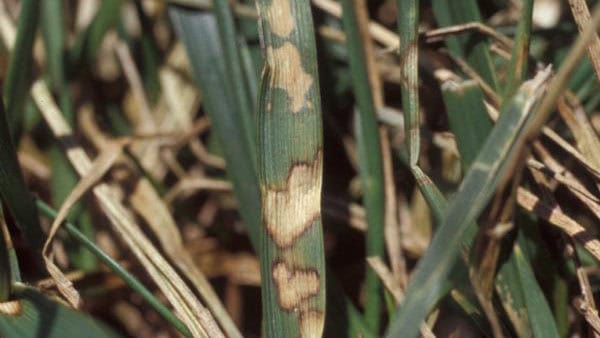
- Dark, water-soaked leaf lesions that rapidly become tan with dark brown margins.
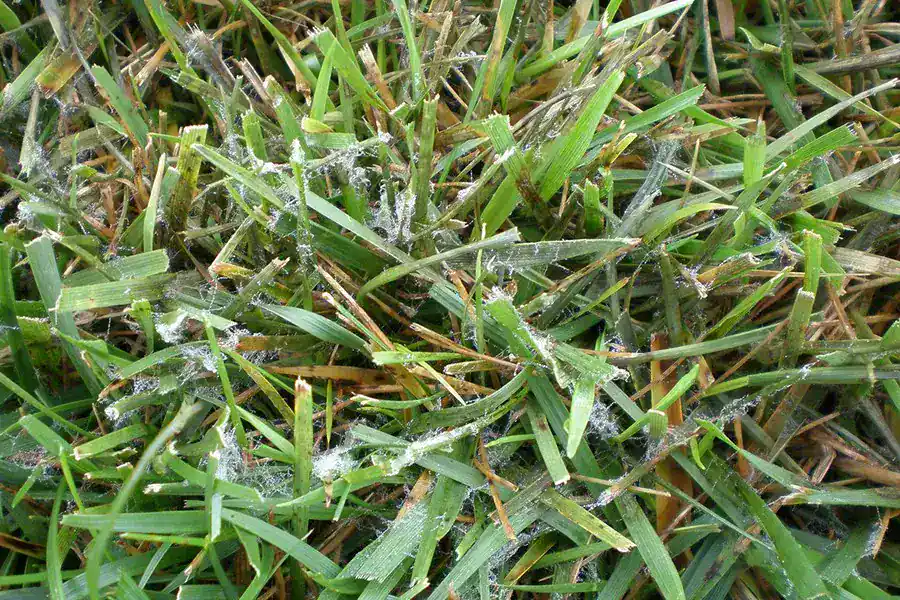
- A distinctive “smoke ring” (a dark grey or purplish ring around the edge of active patches) may be visible during humid mornings, particularly on closely mown turf.
- Leaves collapse rapidly, resulting in a blighted appearance.
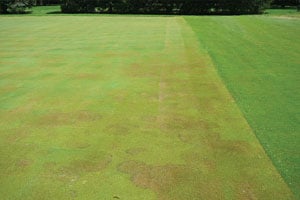
- Patches may merge during severe outbreaks, creating large areas of damaged turf.
Turf Health
- Primarily affects leaf tissue but can also infect leaf sheaths and crowns under severe disease pressure.
- Roots usually remain healthy, allowing turf to recover quickly once conditions improve.
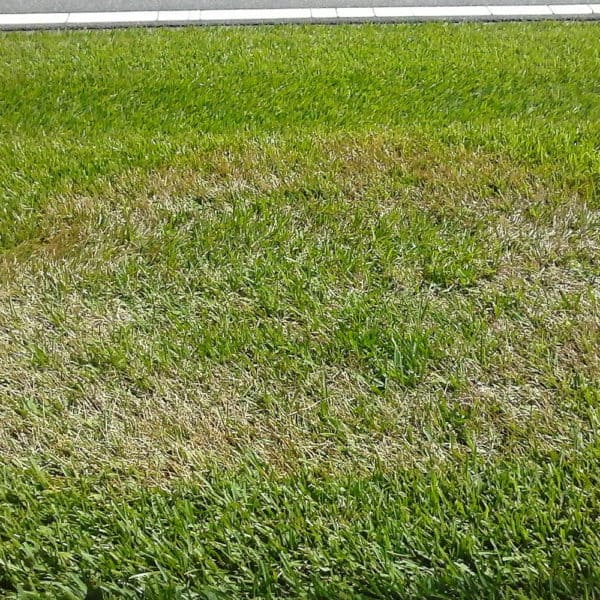
- On warm-season turf, the disease often appears as thinning or irregular patches rather than complete turf loss.
Conditions That Favour Brown Patch
It develops rapidly when high temperatures combine with prolonged leaf wetness.
Factors that increase disease pressure include:
- Night temperatures above 20°C.
- Daytime temperatures between 25–35°C.
- Relative humidity above 90%.
- Leaf wetness lasting longer than 10 hours.
- Frequent rainfall, heavy dew or evening irrigation.
- Excessive nitrogen applications during summer.
- Poor airflow and excessive shade.
- Dense, lush turf canopies.
In Australia, Brown Patch is most common from late spring through early autumn, particularly following periods of warm, humid weather or summer storms.
Management Strategies
Cultural Control
Reducing leaf wetness and improving turf health are the foundations of Brown Patch management.
Recommended practices include:
- Water early in the morning to allow foliage to dry quickly.
- Avoid evening or overnight irrigation.
- Improve airflow by pruning surrounding vegetation where practical.
- Reduce excessive thatch through regular aeration and renovation.
- Avoid excessive nitrogen applications during hot, humid weather.
- Maintain appropriate mowing heights and avoid removing more than one-third of the leaf blade at a time.
- Improve drainage in areas that remain wet for extended periods.
Reducing the duration of leaf wetness is one of the most effective ways to minimise Brown Patch outbreaks.
Fungicide Control
Preventative fungicide applications provide the most reliable control on golf courses, sports fields and other high-performance turf.
For best results:
- Apply fungicides before periods of prolonged warm, humid weather or at the first sign of disease.
- Rotate FRAC groups to minimise fungicide resistance.
- Ensure thorough coverage of the leaf surface, as Brown Patch is primarily a foliar disease.
- Integrate fungicide applications with sound cultural practices for long-term disease suppression.
Research has shown that preventative applications consistently outperform curative treatments once large patches have developed.
Recovery
Because Brown Patch rarely damages the root system, recovery is usually rapid once environmental conditions become less favourable and healthy turf growth resumes.
Balanced fertility, proper irrigation management and minimising turf stress will encourage new leaf growth and restore turf density. Areas affected by severe outbreaks may benefit from light aeration or overseeding where turf cover has been significantly reduced.
Key Takeaway
Brown Patch is a fast-moving foliar disease that thrives during warm, humid weather. Successful management relies on reducing leaf wetness, improving airflow, maintaining balanced nutrition and applying preventative fungicides before disease pressure becomes severe. With an integrated management approach, Brown Patch can be effectively controlled while maintaining high-quality playing surfaces throughout the growing season.
The team at Lawn Addicts can help manage Brown Patch with correct warm or cool season grass identification, followed by top-quality lawn care programs. Message us for further advice on other products.
|
|
|
|
|
|
|
|
|