
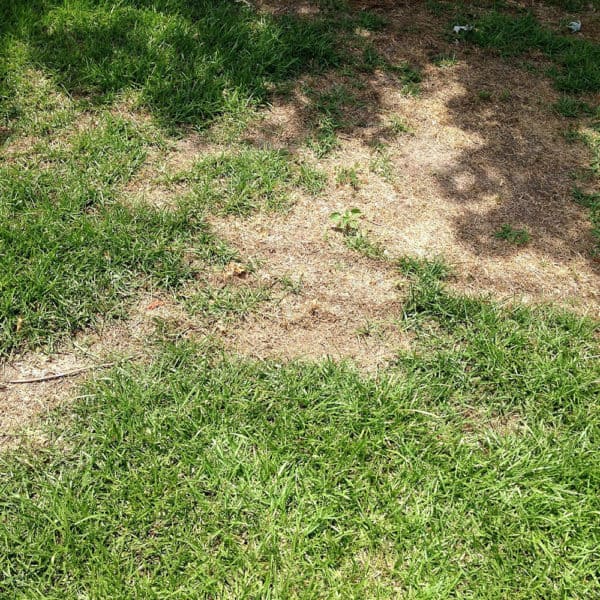
ERI or Ectotrophic Root Infecting Fungi
Ectotrophic Root Infecting (ERI) fungi are a group of soil-borne pathogens that attack the roots, crowns and stolons of turf. Unlike foliar diseases, ERI fungi infect the plant below ground, reducing its ability to absorb water and nutrients, leading to poor vigour, thinning turf and increased susceptibility to environmental stress.
The ERI group includes several important turf pathogens, including Gaeumannomyces graminis var. avenae (Take-All Patch and Couch gass Decline), Ophiosphaerella herpotricha, Ophiosphaerella korrae and Ophiosphaerella narmari (Spring Dead Spot), and Magnaporthiopsis poae (Summer Patch).
These pathogens are commonly found on golf courses, sports fields and racecourses throughout Australia, where they can cause significant root decline if not managed through an integrated program of cultural practices and preventative fungicide applications.
Symptoms of ERI
Above-Ground Symptoms
- Irregular patches of thin, weak or off-colour turf.
- Yellowing, bronzing or straw-coloured leaves.
- Turf wilts quickly during warm or dry conditions despite adequate irrigation.
- Slow recovery following wear or environmental stress.
- Declining turf density over time.
Below-Ground Symptoms
- Darkened or decaying roots.
- Reduced root mass and rooting depth.
- Blackened crowns or stolons in severe cases.
- Plants may pull easily from the soil due to root deterioration.
Because symptoms develop below the surface first, considerable root damage may occur before the disease becomes visible.
Conditions That Favour Disease
ERI fungi are opportunistic pathogens that become more damaging when turf is under stress.
Factors that increase disease pressure include:
- High soil pH.
- Soil compaction.
- Poor drainage or prolonged soil moisture.
- Thatch accumulation.
- Rootzone stress from drought or heat.
- Nutrient deficiencies, particularly manganese in some situations.
- Young or newly established turf.
Disease activity is often greatest during autumn and spring when soil temperatures favour root infection, although symptoms may not become obvious until periods of summer stress.
Management Strategies
Cultural Control
Healthy roots are the best defence against ERI fungi.
Recommended practices include:
- Maintain balanced soil fertility based on soil testing.
- Reduce soil compaction through regular aeration.
- Improve drainage and avoid prolonged soil saturation.
- Manage thatch accumulation.
- Optimise irrigation to encourage deep rooting.
- Monitor and manage soil pH where appropriate.
- Minimise unnecessary turf stress from low mowing heights or excessive traffic.
Encouraging vigorous root development significantly improves turf resilience and recovery.
Fungicide Control
Preventative fungicide applications are recommended on high-value turf with a history of ERI-related decline.
For best results:
- Apply fungicides during periods of active root infection, typically in autumn and spring.
- Water products into the rootzone where required by the label.
- Rotate fungicide groups to minimise resistance development.
- Integrate fungicide applications with sound cultural practices.
Curative control is often limited once extensive root damage has occurred.
Recovery
Recovery depends on the severity of root damage and the underlying cause of turf stress. Improving soil conditions, maintaining balanced nutrition and promoting healthy root growth are essential for restoring turf density. Severely affected areas may require renovation or re-establishment.
Key Takeaway
ERI fungi are root pathogens that reduce turf vigour by attacking the plant below ground. Because symptoms often resemble drought or nutrient deficiencies, accurate diagnosis is critical. Long-term management relies on improving rootzone health, reducing plant stress and implementing preventative fungicide programs where disease pressure is high.
Take a look at our online lawn care products catalogue to find the best treatment, based on accurate grass identification and message Lawn Addicts for further advice on other products to control this disease.