
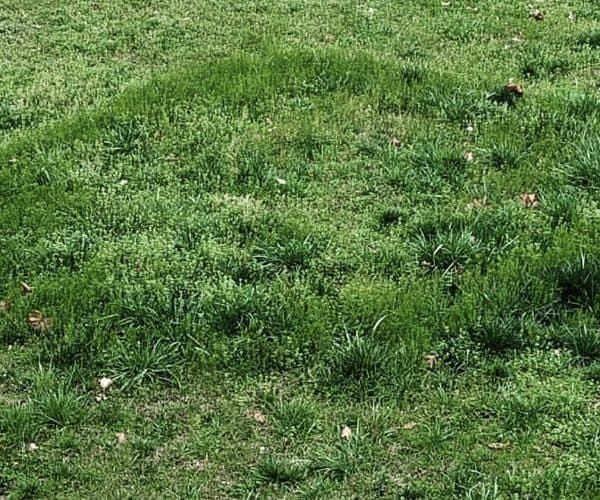
Fairy Ring
Fairy Ring in Turf: Identification, Causes & Management
What is Fairy Ring?
Fairy Ring is a common soil-borne turf disease caused by a range of fungi that decompose organic matter within the soil profile. Rather than infecting the turf plant itself, these fungi grow through the rootzone, breaking down thatch, old roots and buried organic material. As they grow, they alter the movement of water and nutrients through the soil, often leading to distinct rings or patches of stressed turf.
Fairy Ring can occur on both cool and warm-season turf and is commonly found on golf courses, sports fields, racecourses and residential lawns throughout Australia. While the disease is rarely fatal, severe outbreaks can affect turf quality, playability and water infiltration.
Symptoms of Fairy Ring
Fairy Ring symptoms vary depending on the fungal species involved and soil conditions. The disease is generally classified into three symptom types.
Type I – Hydrophobic Fairy Ring
The most damaging form of Fairy Ring.
Symptoms include:
- Rings or arcs of drought-stressed, wilted or dead turf.
- Dry, water-repellent soil that is difficult to re-wet.
- Turf remains dry despite irrigation.
- Most common during warm, dry weather.
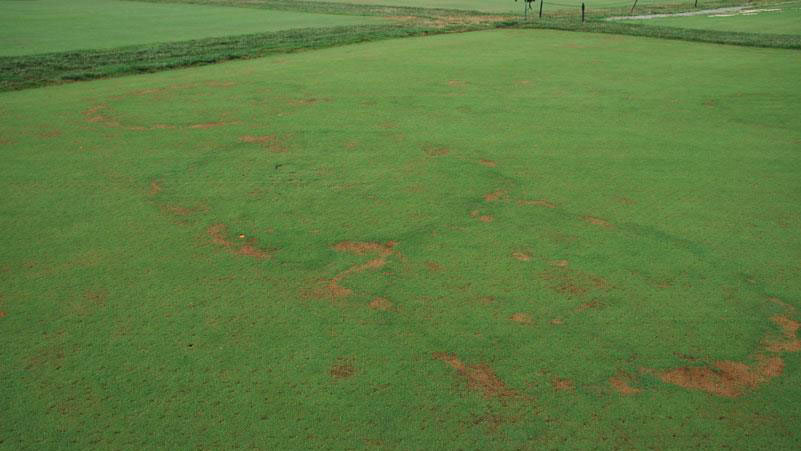
Photo – Fairy Ring | NC State Extension |
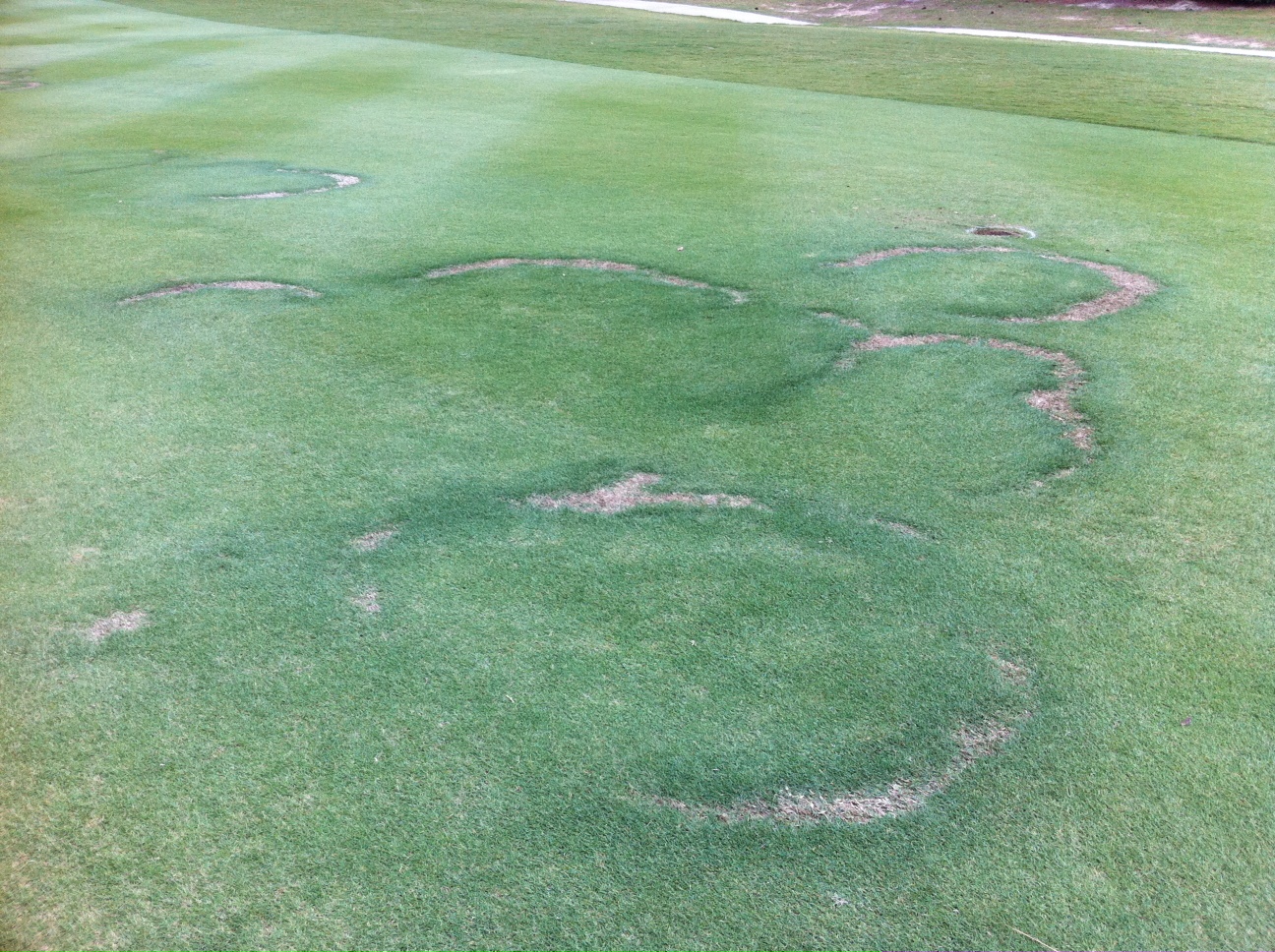
Photo – NC State Turf Pathology: Type I fairy rings in warm-season grasses |
Type II – Dark Green Rings
The most common form found on managed turf.
Symptoms include:
- Dark green rings or arcs of vigorously growing turf.
- Increased growth due to nitrogen released as fungi break down organic matter.
- Turf usually remains healthy but appears uneven in colour.
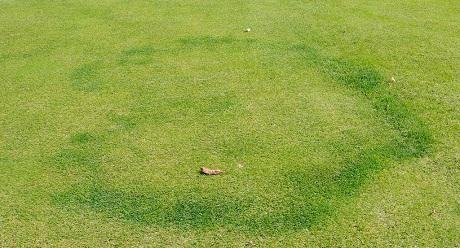
Photo – Fairy Ring Disease | Syngenta Turf & Landscape |
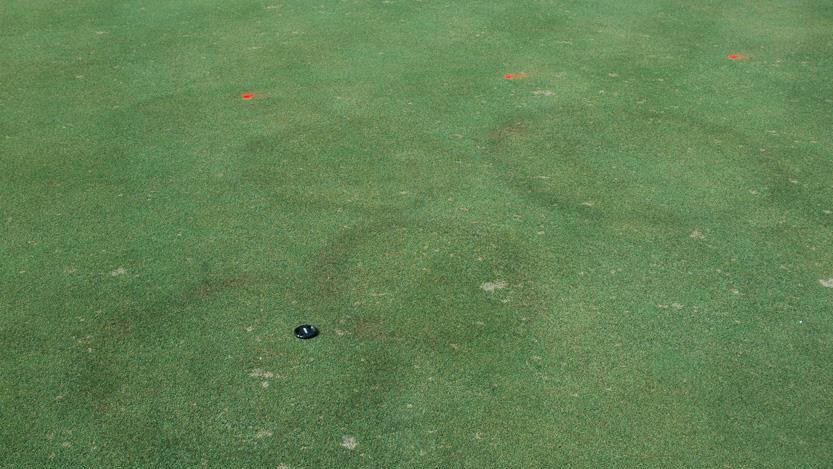
Photo – Fairy Ring | NC State Extension |
Type III – Mushroom Formation
The least damaging but most noticeable form.
Symptoms include:
- Mushrooms or puffballs forming in rings or clusters.
- Little or no damage to the turf itself.
- Fruiting bodies typically appear after rainfall or periods of high humidity.
Individual symptoms may occur alone or in combination, and rings often expand gradually each year.
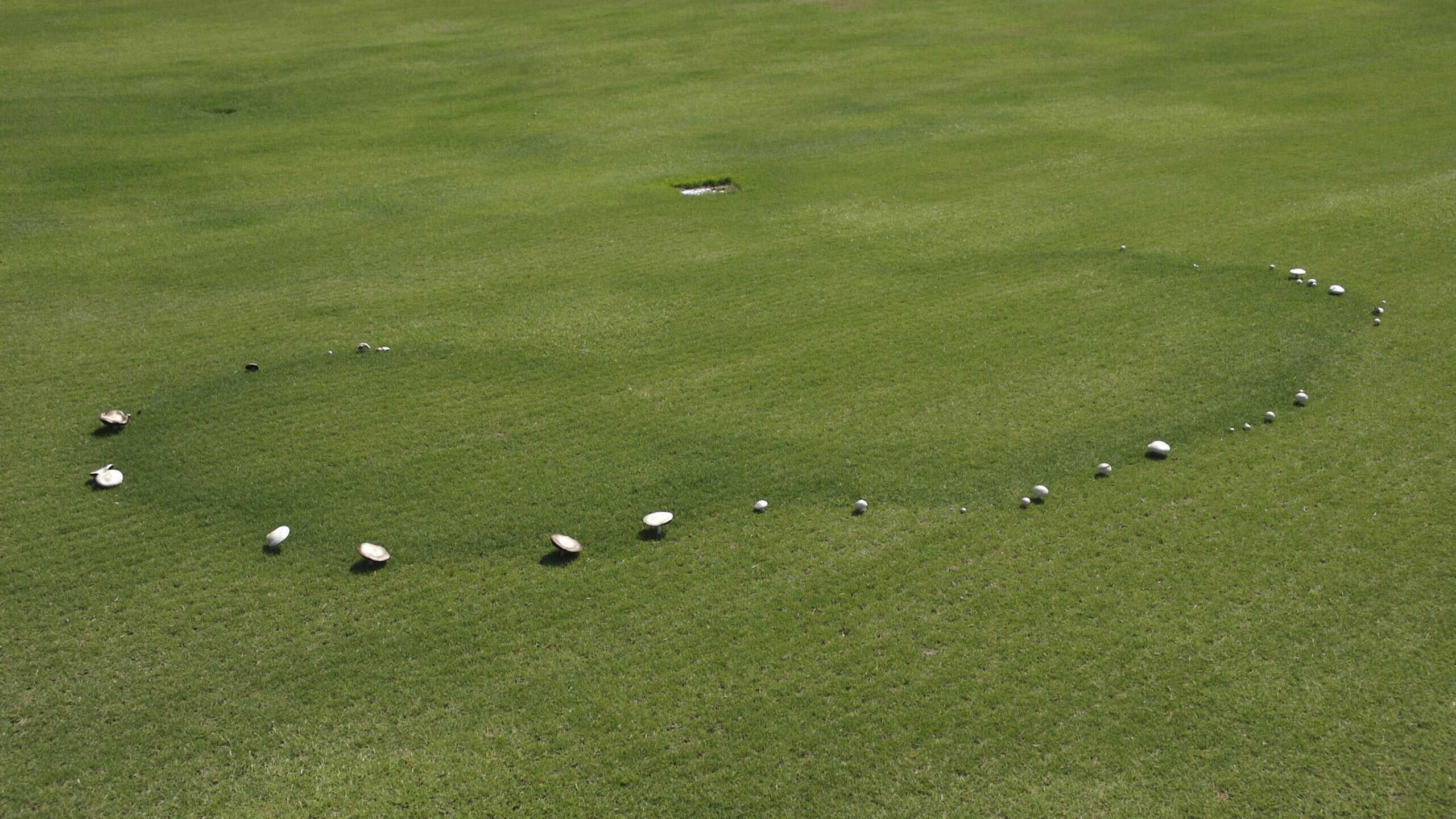
Photo – Fairy Ring | NC State Extension |
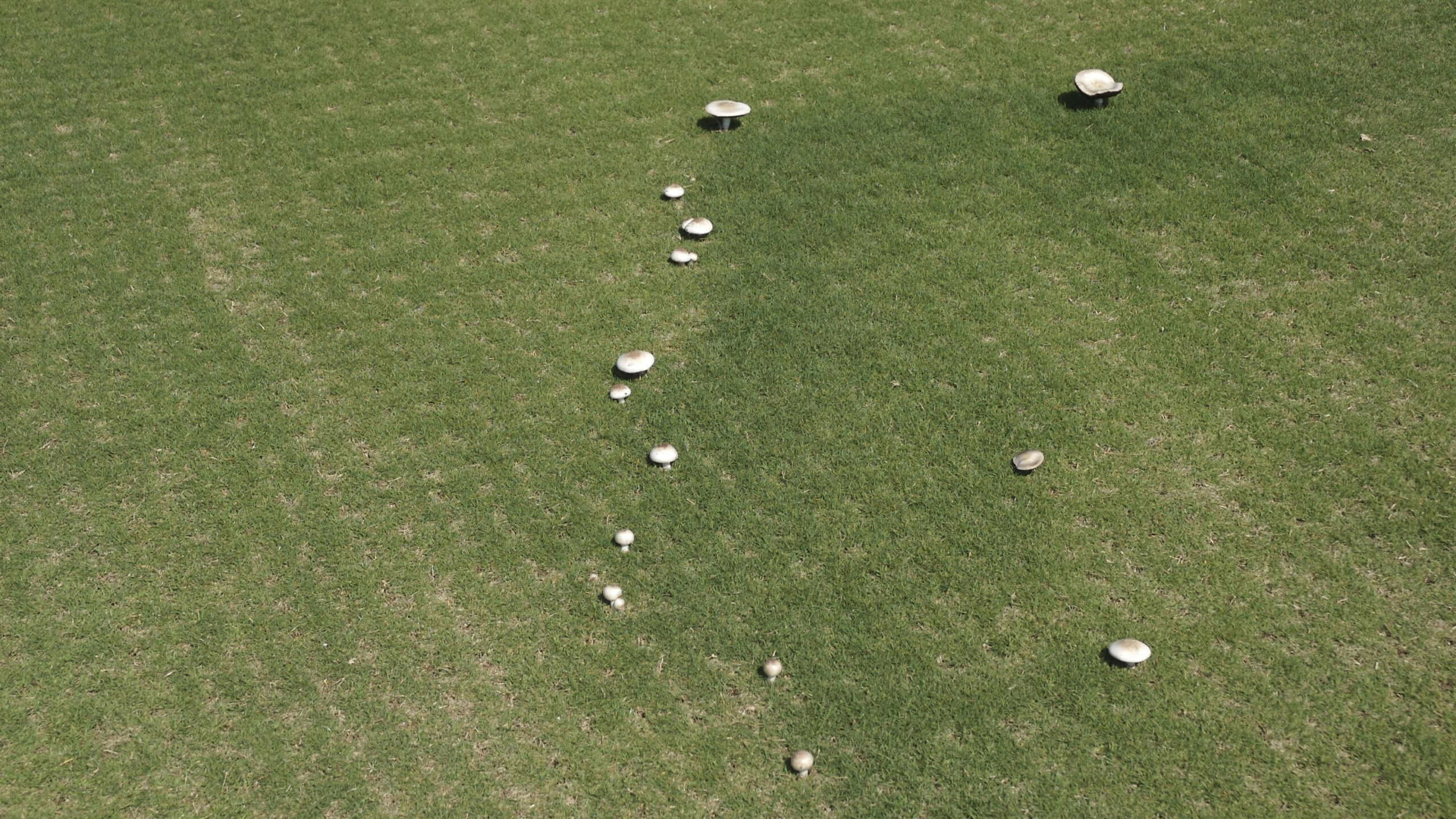
Photo – Fairy Ring | NC State Extension |
Conditions That Favour Disease
Fairy Ring develops when fungi colonise organic matter within the soil profile. Disease pressure is increased by:
- High levels of thatch or buried organic matter.
- Sandy or free-draining rootzones.
- Dry soil conditions.
- Soil hydrophobicity (water repellence).
- Poor irrigation coverage.
- Warm soil temperatures.
- Turf under drought stress.
The disease is most active during spring, summer and autumn, particularly following alternating wet and dry periods.
Management Strategies
Cultural Control
Successful Fairy Ring management focuses on improving water movement through the soil and reducing plant stress.
Recommended practices include:
- Apply quality soil wetting agents to improve water infiltration.
- Deep-water affected areas to rehydrate dry soils.
- Aerate regularly to improve oxygen exchange and water movement.
- Reduce excessive thatch through ongoing renovation.
- Maintain balanced nutrition to encourage recovery.
- Avoid drought stress during warm weather.
For hydrophobic Fairy Rings, combining aeration with wetting agent applications is often significantly more effective than irrigation alone.
Fungicide Control
Fungicides can help suppress Fairy Ring but are most effective when combined with cultural practices.
For best results:
- Apply fungicides preventatively or at the first signs of disease.
- Water products into the soil profile according to label directions to target the active fungal zone.
- Combine applications with wetting agents where appropriate to improve product movement into hydrophobic soils.
- Rotate fungicide groups as part of a resistance management program.
Research has consistently shown that fungicides alone rarely provide complete control if water repellence is not also addressed.
Recovery
Recovery depends on the severity of symptoms and how quickly soil moisture can be restored.
Type II and Type III Fairy Rings often require little intervention beyond improving turf health. Type I Fairy Rings may require repeated wetting agent applications, aeration and careful irrigation before affected turf fully recovers.
Where severe turf loss has occurred, overseeding or turf replacement may be necessary once the underlying soil conditions have been corrected.
Key Takeaway
Fairy Ring is primarily a soil management issue rather than a turf infection. The fungi alter water movement and nutrient availability, resulting in drought stress, dark green rings or mushroom formation. The most successful management programs combine wetting agents, aeration, balanced irrigation and preventative fungicide applications where required. Addressing soil hydrophobicity is the key to achieving long-term control.
The best treatment starts with accurate turf identification, followed by a specialised lawn care program with the selected fungicide. Message Lawn Addicts for further advice on products.