
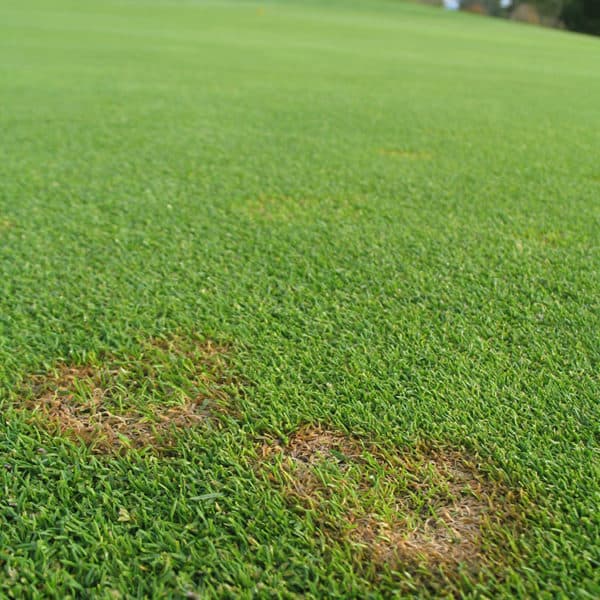
Microdochium (Fusarsium) Patch
Microdochium Patch is one of the most common cool-season turf diseases in Australia, affecting golf courses, sports fields, bowling greens and premium lawns during the cooler months. Caused by the fungus Microdochium nivale, the disease attacks the leaves and crowns of turf, reducing turf quality and playing performance.
Unlike many turf diseases, Microdochium Patch does not require snow cover to develop. While commonly referred to as “Pink Snow Mold” in America in particular, Australian outbreaks occur during cool, wet weather without snow, making Microdochium Patch the preferred name.
Perennial ryegrass, Wintergrass (Poa annua), Creeping Bentgrass and Fescues are particularly susceptible.
Symptoms of Microdochium Patch
Above-Ground Symptoms
- Small, circular patches of water-soaked turf that range from 2–15 cm in diameter.
- Patches turn tan, light brown or straw-coloured as the disease progresses.
- Under cool, humid conditions, a white to pink cotton-like mycelium may be visible around the edge of active patches, particularly in the early morning.
- Individual patches can merge to form larger irregular areas of damaged turf.
- Infected leaves become blighted and collapse, reducing turf density and surface quality.
Turf Health
- The disease primarily affects leaves but can also infect crowns during prolonged outbreaks.
- Severe infections can result in thinning turf and delayed recovery, particularly on intensively managed surfaces.
Conditions That Favour Disease
Microdochium Patch develops when cool temperatures combine with prolonged leaf wetness and high humidity.
Disease pressure increases with:
- Temperatures between 0°C and 20°C, with peak activity around 10–15°C.
- Frequent rainfall, heavy dew or prolonged fog.
- Leaf wetness lasting longer than 10 hours.
- Poor air movement and excessive shade.
- High thatch levels.
- Excessive nitrogen applications during winter.
- Low mowing heights and frequent turf stress.
In Australia, outbreaks are most common from late autumn through winter and into early spring, particularly in southern states such as Victoria, Tasmania, South Australia and the cooler regions of New South Wales.
Management Strategies
Cultural Control
An integrated cultural program is essential for reducing disease pressure.
Best practices include:
- Remove morning dew by switching, mowing or rolling where practical.
- Improve airflow by pruning surrounding trees and vegetation.
- Avoid excessive irrigation during cool weather.
- Improve drainage and reduce surface moisture.
- Manage thatch through regular aeration and renovation.
- Maintain balanced fertility and avoid excessive nitrogen applications during winter.
- Ensure adequate potassium levels to improve turf resilience.
Reducing the amount of time leaves remain wet is one of the most effective cultural practices for limiting disease development.
Fungicide Control
Preventative fungicide applications provide the most consistent control.
For best results:
- Apply fungicides before extended periods of cool, wet weather.
- Rotate FRAC groups to reduce the risk of fungicide resistance.
- Reapply according to label recommendations during periods of prolonged disease pressure.
- Integrate fungicides with cultural practices rather than relying on chemistry alone.
Preventative applications are generally far more effective than attempting to control severe outbreaks after symptoms have developed.
Recovery
Recovery is usually rapid once temperatures increase and active turf growth resumes. Maintaining balanced nutrition, minimising stress and encouraging healthy leaf growth will help affected areas recover more quickly.
Where crown infection has occurred, recovery may take longer and light renovation practices such as aeration or overseeding may be beneficial.
Key Takeaway
Microdochium Patch is the most common cool-season disease encountered on intensively managed turf in southern Australia. Successful management relies on reducing leaf wetness, improving airflow, maintaining balanced nutrition and implementing a preventative fungicide program before periods of prolonged cool, wet weather. Combining sound cultural practices with well-timed fungicide applications provides the most reliable long-term control.
We have a selection of professional lawn care products available online and can help you choose the best fungicides based on warm or cool season grass identification. Message Lawn Addicts for further advice on other products.